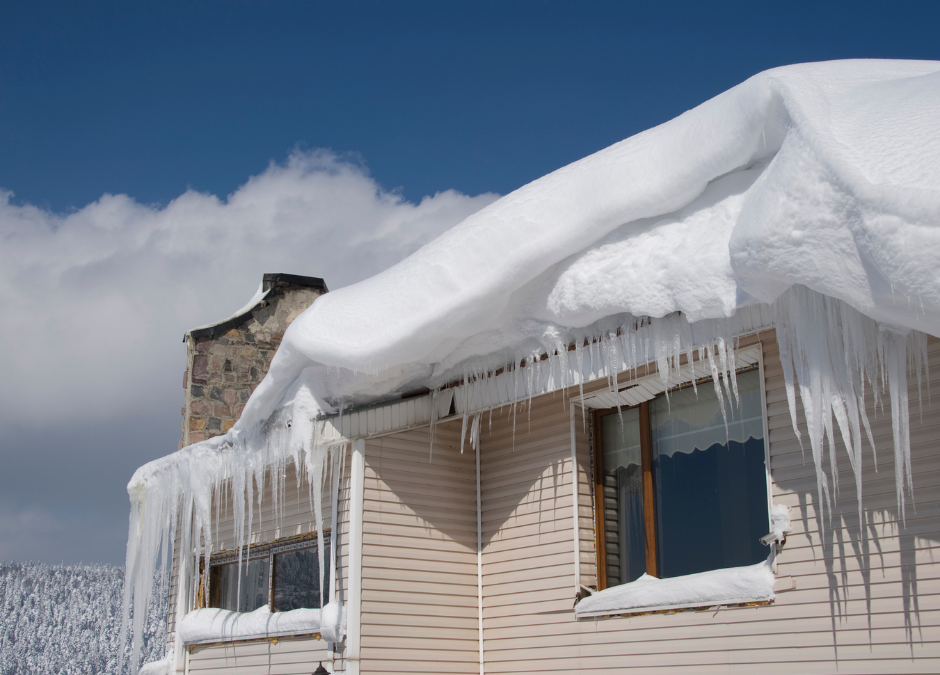
Winter in Northeast Ohio can be brutal on your roof. Heavy snow, freezing temperatures, and repeated freeze and thaw cycles create the perfect conditions for ice dams. Many homeowners do not realize the damage happening until water starts leaking into their home.
Understanding what ice dams are, why they form, and how to prevent them can save you from costly repairs and unnecessary stress during the winter months.
What Are Ice Dams?
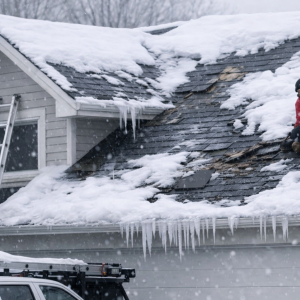
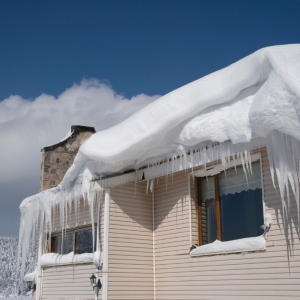
Ice dams form when snow on your roof melts, flows toward the colder edges, and refreezes. Over time, this creates a ridge of ice along the roofline that traps water behind it. As water backs up, it can seep under shingles and into your home.
Ice dams are not just an exterior problem. They often lead to interior damage like ceiling stains, peeling paint, mold growth, and insulation damage.
Why Ice Dams Are So Common in Northeast Ohio
Homes in the Cleveland area and surrounding Snow Belt regions are especially vulnerable to ice dams. Here’s why:
- Lake-effect snow leads to heavier snow accumulation
- Cold temperatures keep roof edges frozen longer
- Poor attic insulation allows heat to escape upward
- Inadequate ventilation warms the roof surface unevenly
When warm air escapes from your living space into the attic, it heats the roof just enough to melt snow. That water refreezes near the eaves, where temperatures stay colder, creating ideal ice dam conditions.
The Damage Ice Dams Can Cause
Ice dams are more than just a winter nuisance. Left untreated, they can cause:
- Roof leaks and interior water damage
- Rotting roof decking and fascia boards
- Mold and mildew inside walls and ceilings
- Damaged gutters and downspouts
- Shortened roof lifespan
The longer ice dams sit on your roof, the greater the risk of long-term structural issues.
How to Prevent Ice Dams on Your Roof
Preventing ice dams requires addressing the root causes, not just the ice itself.
Improve Attic Insulation
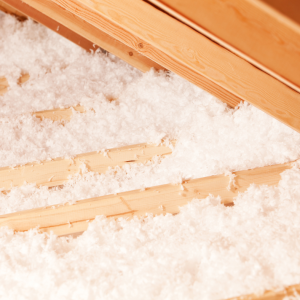
Proper insulation helps keep warm air inside your home instead of escaping into the attic. This keeps the roof surface colder and reduces snow melt.
Ensure Proper Attic Ventilation
Balanced attic ventilation allows cold air to circulate evenly, preventing hot and cold spots on the roof that lead to uneven melting.
Professional Roof De-Icing and Steaming
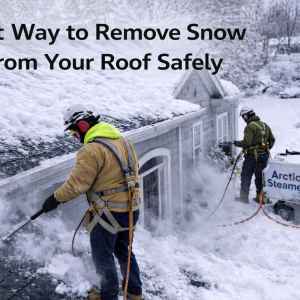
When ice dams are already present, professional roof steaming is one of the safest ways to remove them. This method uses low-pressure steam to melt ice without damaging shingles or gutters.
Address Gutter and Drainage Issues
Clogged or damaged gutters can make ice dam problems worse by preventing proper water drainage.
When to Call a Professional
If you see thick ice buildup along your roof edge, large icicles, or interior water stains, it is time to call a professional. Trying to remove ice yourself can damage your roof and create serious safety risks.
DunRite Exteriors helps homeowners across Northeast Ohio protect their roofs during harsh winter conditions. A professional inspection can identify insulation, ventilation, and ice dam issues before they turn into expensive repairs.
If you are concerned about ice dams this winter, contact DunRite Exteriors for expert guidance and dependable solutions.